The domain gives it meaning.
A node can represent a communication choice, a source record, an interface state, or a spatial observation. Its meaning and available operations come from the configured system.
The company
We’re Perslis. An AI research and infrastructure company building a different kind of machine mind.
A different question
The industry’s race is often described in bigger models, more data, and larger computing clusters. We’re exploring a different frontier.
What if intelligence didn’t require billions of neural weights? What if a machine could perceive its environment, understand its state, reason through a problem, take action, adapt from failure, and show why it made a decision—all locally?
That’s the research direction behind Perslis: lightweight, symbolic machine minds designed to bring intelligence out of the data center and into the environments around us.
Our mission is to make machine intelligence smaller, more transparent, more accessible, and capable of acting independently within explicit boundaries.
Symbolic machine intelligence
We’re building our own models and the infrastructure around them. The shared idea: represent what is known explicitly, keep authority outside guesswork, and make the path from observation to action visible.
Read the available signals. Keep observations separate from assumptions.
Record facts, relationships, provenance, and what remains unknown.
Apply explicit operations and constraints to the state the system actually holds.
Check a proposed action against the permissions and boundaries of its deployment.
Use verified outcomes to refine behavior without granting new authority.
Check the result against the available evidence. Retain the decision trace.
Peel explores source-pinned symbolic state and structural fact authorship. It is a distinct component, not another name for Lois. That separation—knowledge, reasoning, and action with clear boundaries—is central to our research.
Read the Peel researchThis is our research pattern, not a claim that every application contains every component or has the same capabilities.
The Perslis Helix
The Helix is a configurable symbolic intelligence topology—not a single docking algorithm, camera map, or game agent. The application determines what its nodes, relationships, constraints, and objectives represent.
Our research explores a shared structure for organizing observable state, relationships, constraints, and execution traces. Change the domain, not the idea: communication choices, scientific evidence, interface states, or spatial observations, with explicit boundaries around what the system can do.
Loading public records…
Drag to rotate. Click a node to inspect. Arrow keys select nodes.
Real harvest records. Illustrative 3D layout. Solid connections show recorded topic membership; the dotted spiral is a display guide. Pulses illustrate a local lookup, not live runtime telemetry. No private child or patient conversations, proprietary rules, or execution-kernel details are included.
A node can represent a communication choice, a source record, an interface state, or a spatial observation. Its meaning and available operations come from the configured system.
Make dependencies and boundaries inspectable. A visual connection is not enough: the underlying record must say what the relationship means.
This explorer demonstrates public data configuration and retrieval. Demonstrating that the Helix drives reasoning and controlled action requires reproducible runtime traces and evaluations.
One company. Many possibilities.
They demonstrate what can be built with the architecture.
We’re not four unrelated businesses. Communication, legacy computing, autonomy, and scientific reasoning are places to develop, test, and demonstrate our machine intelligence.
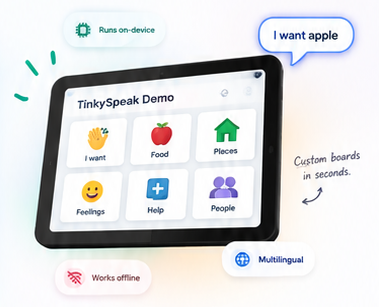
TinkySpeak demonstrates communication technology on local devices. TinkyMind supplies a small on-device language component; the communication runtime preserves the user’s choices and delivery state.
Explore communication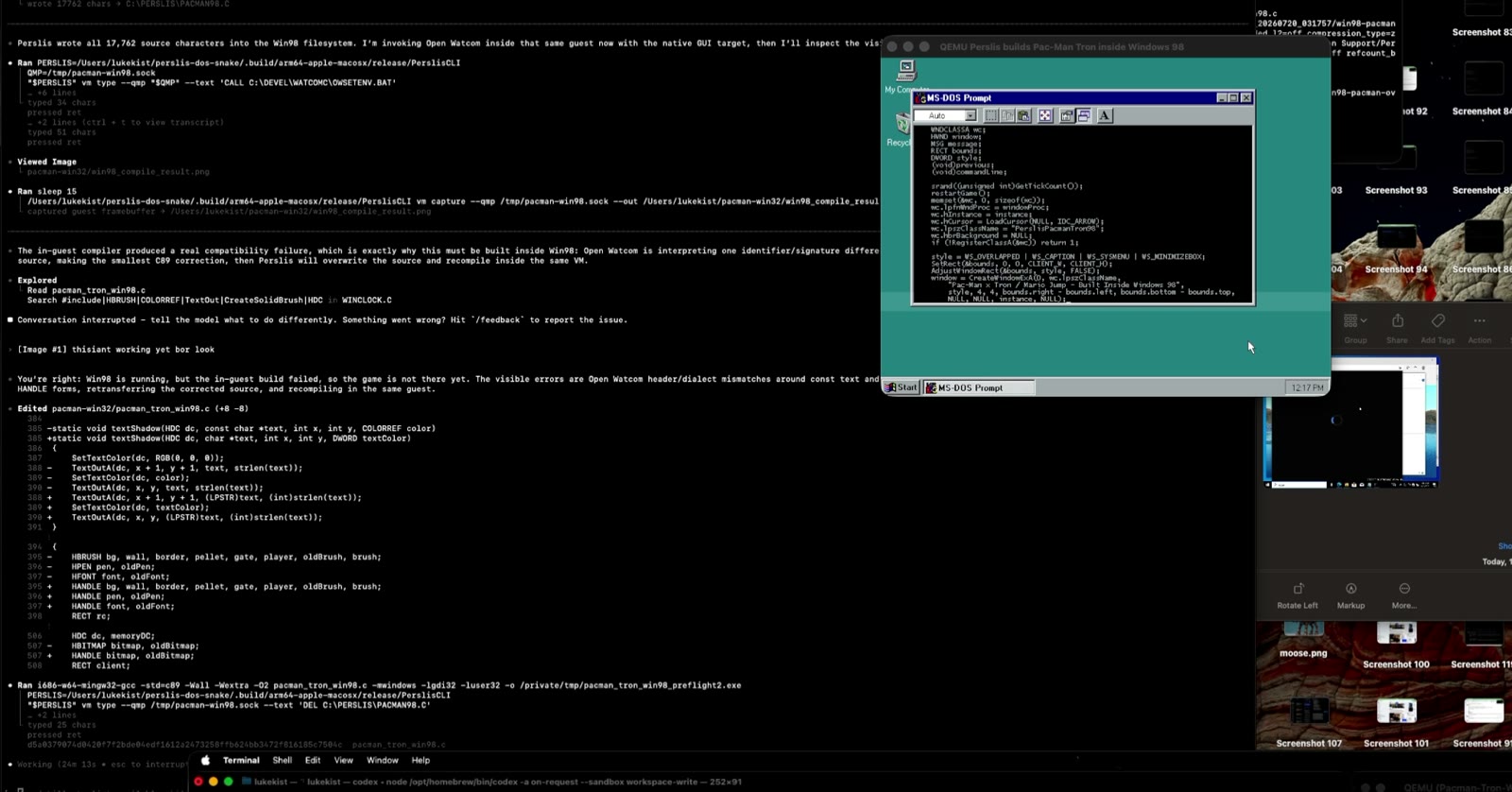
Existing software does not always offer a modern API. Our legacy work demonstrates ways to inspect and operate older computers and applications instead of assuming the world can be rebuilt first.
Explore legacy systems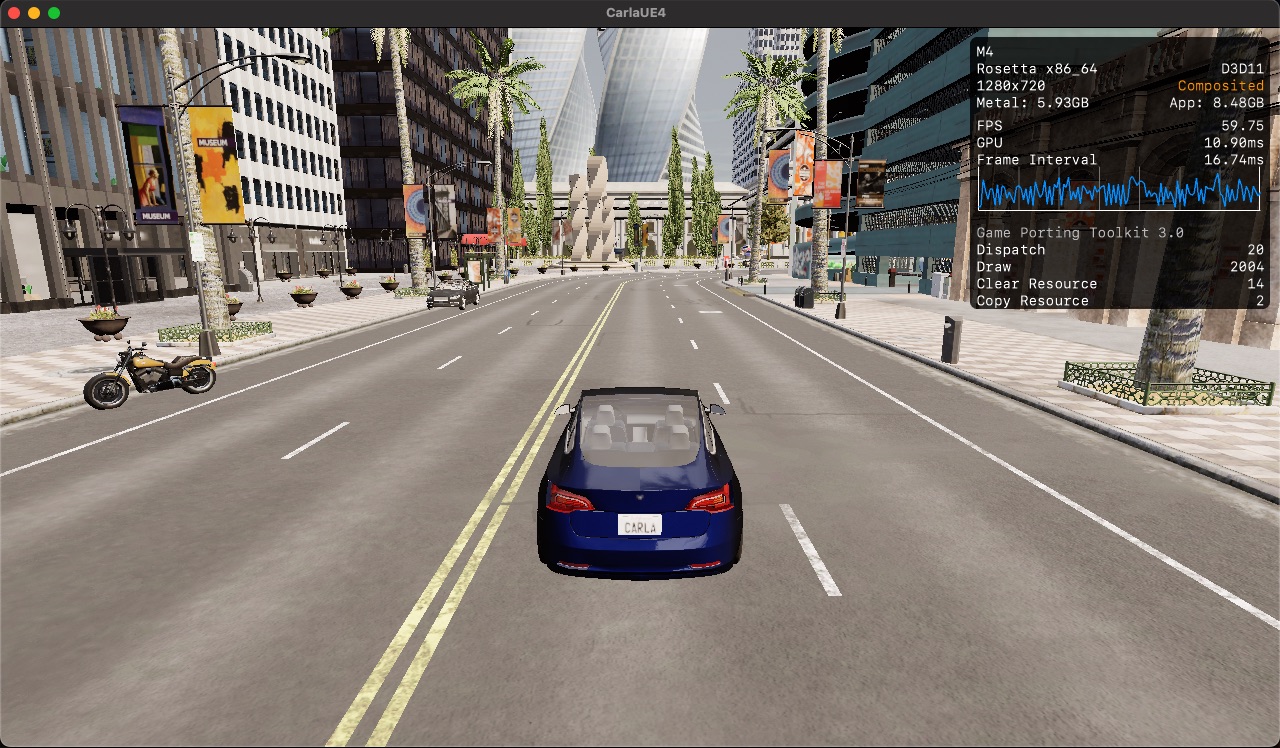
Game worlds and driving simulations let us study spatial navigation, real-time decisions, failure, and action control. They are controlled test environments—not a substitute for physical-world validation.
Explore autonomy research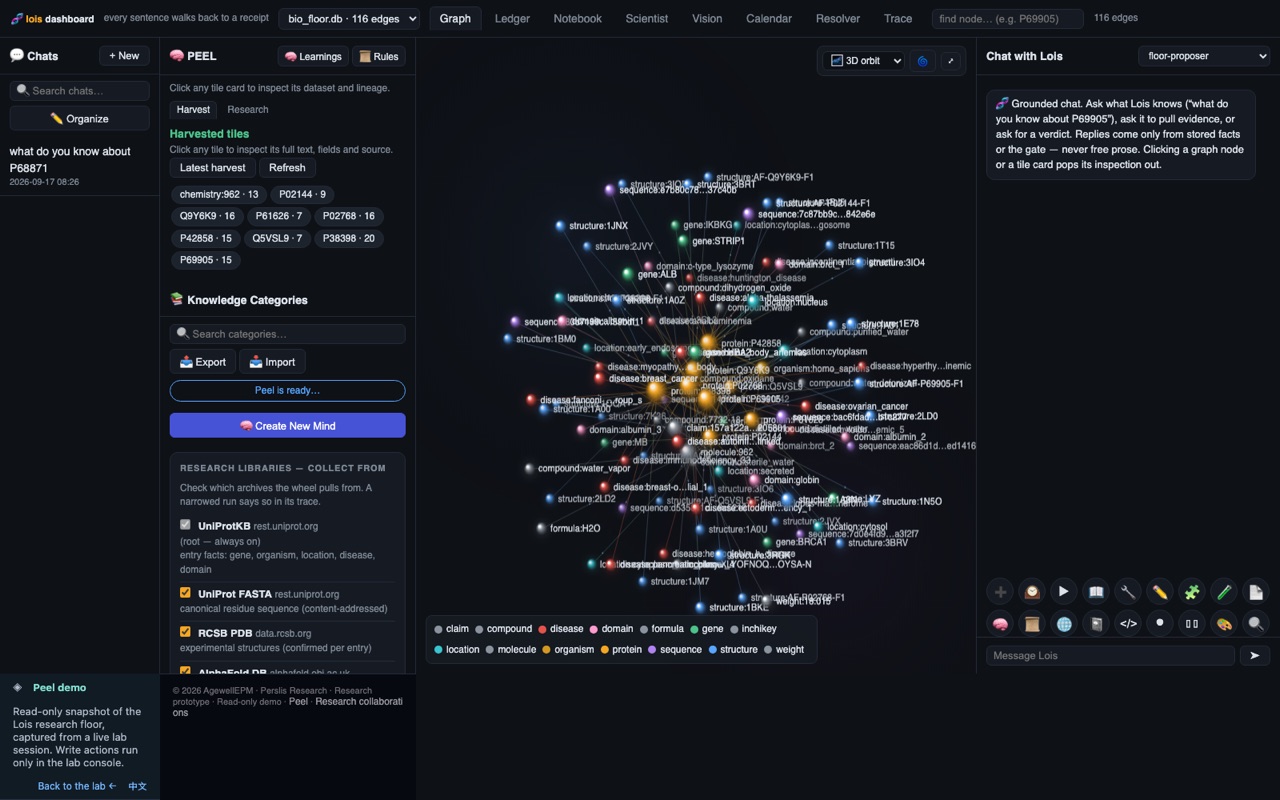
Lois connects available facts and typed relationships to an inspectable reasoning path. The science workspace demonstrates research with source receipts and visible evidence gaps—not fluent text treated as proof.
Explore scientific reasoningOur model family
Our symbolic cores execute explicit operations without neural inference. Our hybrid and language components can use neural weights. “Local” describes where a component runs; “symbolic” describes how it reasons. We keep those claims separate.
Scientific reasoning with the evidence attached.
Bounded learningLearn from verified failure. Keep authority fixed.
Hybrid symbolic modelTurn system questions into explicit operations and traces.
On-device languageA small local language model for communication.
Our research standard
Demonstrations establish feasibility. Reproducible evaluations establish credibility.
We want the work judged on what it can actually do, where it fails, and how it compares with symbolic, neural, and hybrid alternatives—not on a universal promise of perfection.
Publish the task, environment, baseline, interventions, results, and failures. A simulation result stays a simulation result.
Evaluate memory, latency, energy, and cost on the stated hardware. Smaller compute is a research objective, not an unmeasured savings claim.
Expose the evidence, rules, action boundaries, and refusals. A readable trace supports review; it is not, by itself, a safety certification.
The people behind the work
Perslis brings research, engineering, and practical demonstrations together around one question: what should a machine mind be able to know, do, and prove?
Meet the founder and the systemsPerslis Machine Minds
We’re building the foundations of a different kind of machine mind.
Perslis. Intelligence without the weight.